
Coin value checker: scan a coin by photo, see what it's worth
Buck checks a coin value from a photo on iPhone and Android: it names the coin, then shows an estimated range. Free to download; app scans need Buck Pro.
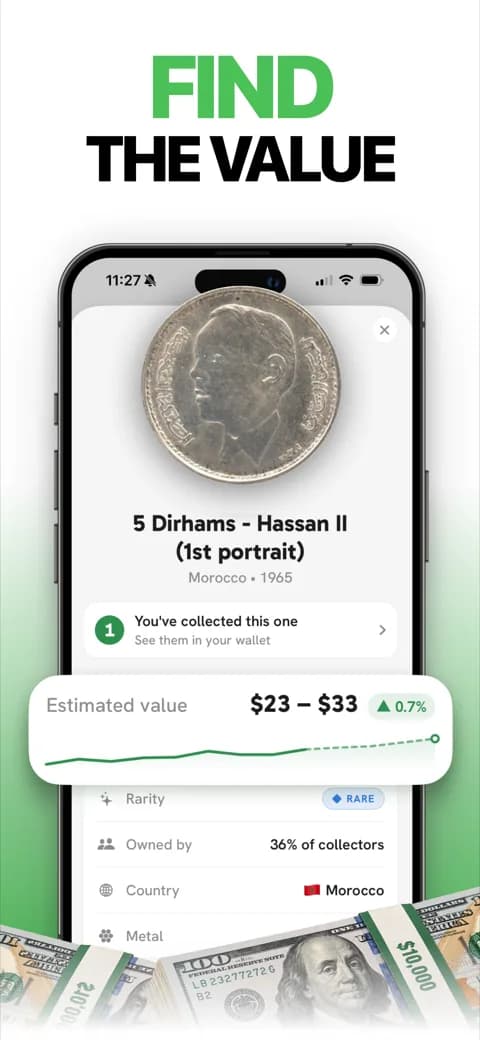
Buck is a coin value checker for iPhone (iOS 17 or later) and Android (8.0 or later). You photograph a coin, front then back; Buck names it (country, denomination, series, year or period) and shows what it is worth as an estimated range taken from published price guides. Banknotes are checked the same way.
It is free to download. Browsing the catalog, where every type already carries its estimate, and keeping a collection cost nothing. Checking a coin with the camera in the app needs Buck Pro: $39.99 a year or $5.99 a week (US stores, checked 10 November 2026), with no free trial. On the website, getbuckapp.com/coin-identifier lets anyone try a few checks a day, with the coin's name and an estimated value; the app adds the collection and where to sell the coin.
What a coin value check gives you
- The coin's name. Country, denomination, series and the year or period, which is what every price guide asks for first.
- An estimated value. A range on current euro and sterling cash, a range or a single figure elsewhere, and no figure at all on about one type in five.
- A rarity rung, on the coins that have one, so the piece worth a second look stands out from the pocket change.
- Where to sell it. The marketplace that suits the coin in your country, from the coin's own page.
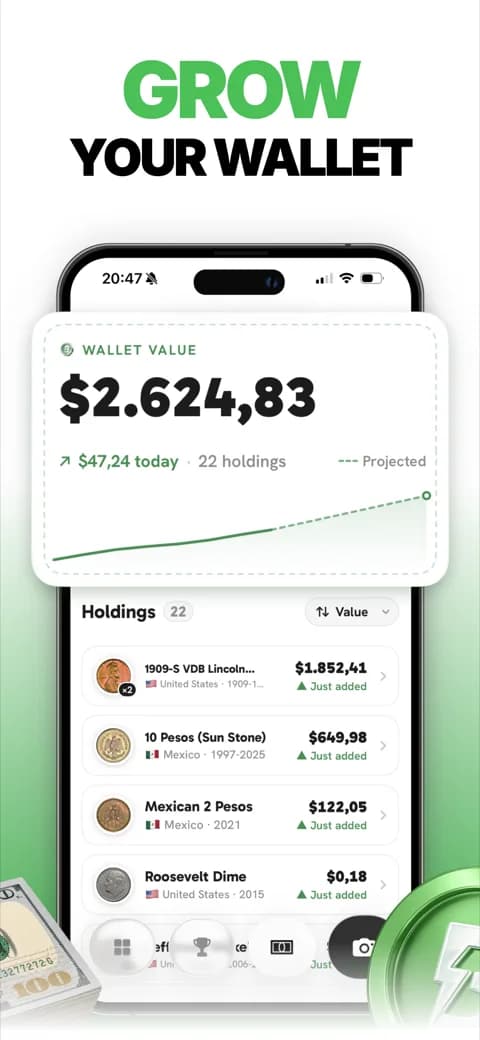
- A running total. Every coin you check can go into your collection, and the total adds up as you go.
How to check a coin's value by photo
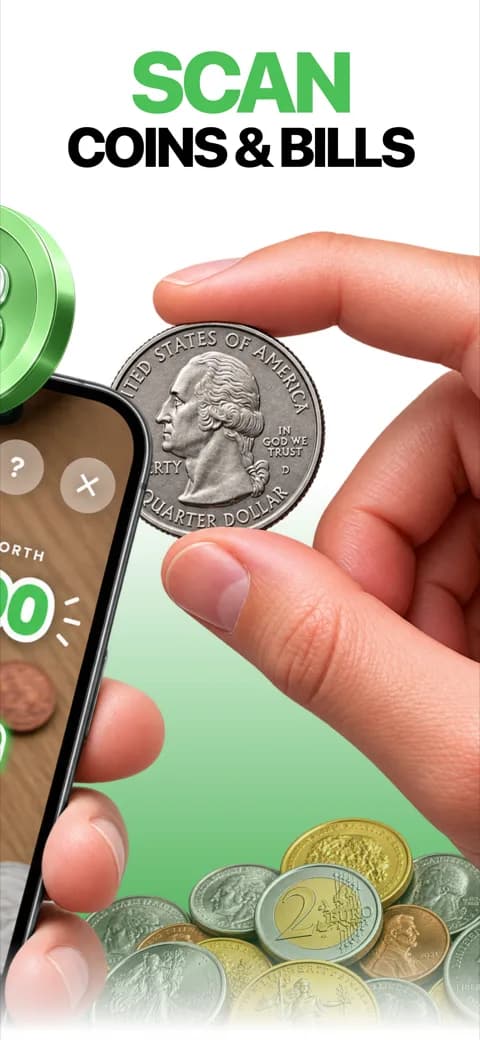
One coin at a time, front first, then the back. The back is not optional: many coins share one face with a dozen relatives and differ only on the other, and the value follows the difference. A session keeps a running total and adds the whole batch to your collection in one tap. If two coins are in the frame, the app answers "One coin at a time" rather than guessing.
Daylight, a plain table and a coin that fills the frame do more for the read than any filter. Leave the dirt on: cleaning a coin takes value off it, and the camera reads through it anyway.
If you only want the name, the coin identifier page covers that half in detail, with the outside tests of a rival app set beside our own numbers.
Where the value comes from, and what it leaves out
The figure is an estimate for a coin in ordinary condition, taken from published price guides. It is never an offer to buy. On current euro and UK cash it is always a range, and it never drops under the coin's face value.
Most coins from change are worth what is stamped on them. CoinWeek puts the rule for clad quarters flatly: worn ones "carry no numismatic premium". A value checker earns its keep on the handful that are not ordinary: out of circulation, struck in small numbers, or unworn.
What a photo cannot settle is the grade, the scale from worn to as-struck. On a scarce coin the gap between two neighboring grades can be most of the value, and wear is read under angled light by somebody turning the coin in their fingers. A photo also cannot show that a coin was cleaned, or that it is genuine. For those, the answer comes from a dealer across a counter or a grading service you mail the coin to.
An unsure read, or a coin described as gold against a base-metal record, gets no match at all. A blank answer means take another shot, not worthless.
A photo check or a lookup by year?
There are two ways to check a coin's value, and they suit different coins.
A lookup by year and mint mark is the right tool when you already know what the coin is. The PCGS Price Guide and the NGC Coin Price Guide list US coins date by date, with a figure for each grade. Buck's catalog is organized by type, not by year and mint, so for a US key date those tables go deeper than the app does. Our guides walk through the dates people ask about most, such as quarters with no mint mark.
A photo check is the right tool when you do not know what you are holding: a foreign coin from a trip, a drawer of pre-euro change, a banknote in a script you cannot read. Typing a description into a search box gets you nowhere with those, and the camera gets you a name and a figure in a few seconds.
US coins people check most, by denomination
When an old US coin turns up in a change jar, a collector asks two things before any price: is it silver, and is it a scarce date? The date on the coin answers the first for everything but the nickel, and the guides below take each denomination in turn.
- Penny. Most wheat cents, struck from 1909 to 1958, are common, but a handful of key dates are not: see wheat penny value and the 1943 steel penny.
- Nickel. A Jefferson nickel dated mid-1942 through 1945, the war nickel, is 35% silver: look for the large mint mark above the dome of Monticello on the back. For older pieces see the buffalo nickel and the shield nickel.
- Dime. Every Mercury dime (1916 to 1945) is 90% silver, and so is any Roosevelt dime dated 1964 or earlier.
- Quarter. A Washington quarter dated 1964 or earlier is 90% silver; from 1965 on, the ones struck for circulation are copper-nickel clad. The later ones people ask about are the state quarters and the Bicentennial quarter.
- Half dollar. A 1964 Kennedy half dollar is 90% silver, and those dated 1965 to 1970 are 40%: see Kennedy half dollar value.
- Silver dollar. Morgan and Peace dollars, struck from 1878 through 1935, are 90% silver: see the Morgan dollar and the Peace dollar. The Susan B. Anthony dollar that came later has no silver in it.
The full table is in which US coins are silver, and the silver melt value calculator turns a pile of silver coins into a dollar figure. What makes a coin in these series rare is its date and mint mark. An old coin struck by the hundred million is still a common one.
Frequently asked questions
How can I check the value of my coins for free?
Buck is free to download, and its catalog shows every type's estimated range without a scan: find the country and the denomination and read the figure. The PCGS and NGC price guides are free to read too, and list US coins by date, mint mark and grade. Scanning a coin with the camera in the app needs Buck Pro; the coin identifier on getbuckapp.com/coin-identifier allows a few checks a day.
How can I check if a coin is worth anything?
Look at three things: whether it still circulates, how many were struck, and how worn it is. A worn coin from change is usually worth face value. The money sits with coins out of circulation, struck in small numbers, or unworn. A value checker tells you which of those you are holding.
How can I determine the value of my coins?
Name the coin first (country, denomination, year, mint mark), then look it up in a price guide at a grade that matches its wear. Buck does the naming from a photo and shows the estimated range; the grade, which moves most of the price on a scarce coin, is settled by a dealer or a grading service holding the coin.
Is there a coin value checker by photo?
Yes. Buck reads a photo of the front and the back, one coin at a time, matches it against its catalog and shows an estimated value where the price guide has one. It works for banknotes the same way.
How accurate is a coin value checker app?
The name is the reliable half; the figure is an estimate for a coin in ordinary condition. No app can read a coin's grade from a photo, or tell a cleaned or counterfeit coin from a genuine one, and those decide the price of anything scarce. About one type in five in Buck's catalog has no price yet.
Does it check old and foreign coins?
Foreign coins are where a photo check saves the most time: an unfamiliar design is named in seconds. Old and worn coins are harder. If the date is soft or the design is mostly gone, treat the answer as a shortlist and ask a dealer.
What this page is based on: CoinWeek's history of the clad Washington quarter, and the PCGS and NGC price guides as the references for US coins by date and grade. Prices are US store prices, checked 10 November 2026.
Sources
- CoinWeek, Washington Quarter, Clad (1965-1998), accessed September 21, 2026
- PCGS Price Guide, accessed November 10, 2026
- NGC Coin Price Guide, accessed November 10, 2026


